Head Skull: A Bold Choice for Striking Visuals
Finding a typeface that balances raw energy with practical utility can be a challenge. You want something with personality, something that grabs attention, but it also needs to work across different mediums without sacrificing clarity. Head Skull steps into that space as a compelling option for designers and creators who need their typography to make a statement. This isn't just another decorative font; it's a tool built for impact, with a full character set that ensures it's as functional as it is visually arresting.
Understanding the Visual Character of Head Skull
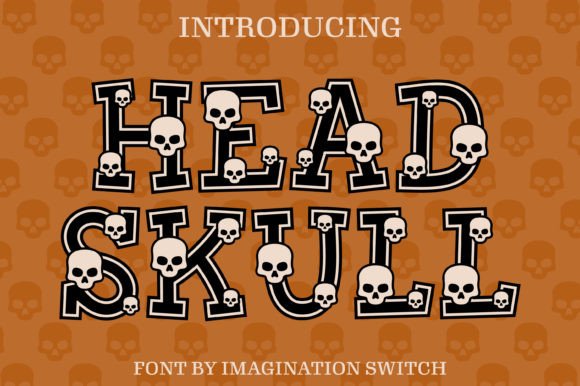
At its core, Head Skull is a display font designed for prominence. Its defining feature is the strategic use of color and form to create an almost three-dimensional, textured appearance. The letterforms often incorporate subtle shading, gradients, or intricate patterns that give them depth and a tactile quality. This treatment transforms simple text into a visual element in its own right.
The style leans towards a modern typography aesthetic, but with a distinct edge. It carries a personality that is bold, confident, and slightly unconventional. Think of it as the typographic equivalent of a standout piece in a collection—memorable and designed to be noticed. Despite its decorative nature, the font maintains a strong foundation in legibility. The designers have ensured that the uppercase, lowercase, and numerals are all clearly defined, making Head Skull a viable creative font for more than just logos.
Where Head Skull Truly Shines
The real value of a font like this is in its application. Because it's a complete typeface with a full glyph set, its use extends far beyond a single headline. Here’s where you can put it to work effectively.
- Branding and Logo Design: For brands that want to project confidence, creativity, or a touch of rebellious spirit, Head Skull can be a powerful choice for a wordmark or logotype. It works exceptionally well for businesses in music, streetwear, creative agencies, gaming, or any industry where standing out is part of the brand identity.
- Editorial and Packaging Design: In magazine layouts, book covers, or product packaging, the font can serve as a dramatic headline or a callout. Imagine it on the cover of a thriller novel or on packaging for a specialty craft beer. It instantly sets a mood and draws the eye, making it a valuable asset in editorial design and packaging design.
- Digital and Social Media: On the web, Head Skull can elevate a hero banner, a promotional graphic, or a video thumbnail. For social media graphics, its inherent visual interest can increase engagement, making a post more likely to stop the scroll. It’s particularly effective for short, punchy statements.
- Print and Promotional Materials: Think posters, event flyers, merchandise, and apparel. The font’s detailed rendering holds up well in print, especially at larger sizes. For small business owners creating their own marketing materials, using Head Skull for key headings can give a DIY project a professional, polished edge.
Making Head Skull Work for Your Project
Adopting a premium font like this requires a bit of strategy. Its strength is in its visual weight, so it's rarely the right choice for body text. Instead, think of it as a specialist in your typographic toolkit.
Pairing with Complementary Fonts
The most effective way to use a display font is in contrast with a more neutral typeface. Head Skull pairs best with clean, simple fonts that provide breathing room.
- With a Sans Serif: A classic, geometric sans serif font for body text creates a clean, modern look. The sans serif provides excellent readability for paragraphs, while Head Skull commands attention in headlines and subheads.
- With a Serif: For a more editorial or sophisticated feel, try pairing it with a traditional serif font. The contrast between the ornate display face and the refined serif can be very elegant, suitable for luxury branding or high-end publications.
- Avoiding Clutter: Steer clear of pairing it with another strong script font or handwritten font. The goal is harmony, not a visual competition between two distinct personalities.
Evaluating Readability and Licensing
Always test the font at the size you intend to use it. While Head Skull boasts excellent legibility for a display font, intricate details can merge at very small sizes. It’s built for headlines, not fine print.
As a commercial font, it’s crucial to understand the licensing. Most premium licenses cover specific uses—like a single user, a number of computers, or a specific project scope (e.g., one website, one app). For entrepreneurs and small business owners, ensure the license you purchase covers your intended application, whether it's for your logo, merchandise, or digital ads. This protects your brand identity and ensures you're using the design assets correctly.
A Practical Design Observation
I’ve seen projects where a font like this was used for every piece of text, and the result was overwhelming. The key is restraint. Use Head Skull for your primary headline, a tagline, or a featured quote. Let it be the star of the show. Then, let a supporting cast of more subdued fonts handle the supporting information. This approach builds a clear visual hierarchy, guides the viewer's eye, and makes your message more impactful and professional.
Ultimately, Head Skull is more than just an intriguing set of characters. It’s a versatile creative font that, when used thoughtfully, can significantly enhance the visual storytelling of a project. It offers a way to inject energy, confidence, and a distinct point of view into your designs, helping your work—and your client's message—get the attention it deserves.