Halloween Candy: Your Go-To Typeface for Festive Design
When the air gets crisp and the leaves start to turn, we all know it’s time to break out the spooky decorations. If you’re a designer, crafter, or small business owner, you also know it’s time to start thinking about seasonal branding. One of the most effective ways to instantly evoke that Halloween spirit is through typography. Enter Halloween Candy, a premium font that captures the playful, colorful, and slightly spooky vibe of the season. It’s not just a typeface; it’s a complete design asset that brings the fun of trick-or-treating right onto your canvas.
Visual Style and Personality
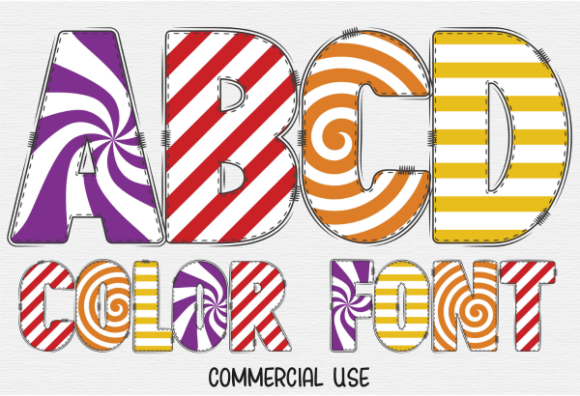
Halloween Candy is a detailed, colored display font that mimics the look of sweet treats and whimsical Halloween icons. Imagine the icing on a sugar cookie or the colorful wrappers of your favorite October chocolates—that’s the energy this font brings. It is a creative font designed specifically for impact rather than body text. Its personality is bold, festive, and undeniably cute, making it a standout choice for anyone looking to move away from the traditional, darker "horror" typography often associated with the holiday. Instead of blood and gore, this typeface offers fun, family-friendly vibes that appeal to a broad audience.
The visual characteristics are intricate. The letters often feature unique embellishments, textures, or integrated imagery that define the Halloween theme. Because it is a colored font, the design assets are built right in. You don’t need to spend hours in Illustrator adding gradients or textures to make your text pop; the Halloween Candy font does the heavy lifting for you. This makes it an incredible time-saver for high-volume seasons like Q4, where efficiency is just as important as aesthetics.
Best Applications for This Creative Font
Understanding where to use a specialized typeface like this is key to a successful project. Because of its detailed nature, Halloween Candy functions best as a headline or feature element. It is not a serif font or a sans serif font meant for long paragraphs; rather, it is a statement piece.
Here are some of the most effective ways to utilize this asset:
- Event Marketing: If you are designing flyers for a local haunted house, a school fall festival, or a community pumpkin patch, this font grabs attention immediately. It sets a tone of excitement and fun before the reader even processes the copy.
- Packaging Design: For entrepreneurs selling seasonal goods—think bakery boxes, candy wrappers, or party favors—Halloween Candy adds a professional, thematic touch that elevates the product.
- Digital Content and Social Media: In the crowded space of social media graphics, standing out is difficult. Using a distinct display font for Instagram stories, YouTube thumbnails, or Pinterest pins can significantly increase click-through rates. The visual hierarchy it creates ensures your message is the first thing people see.
- Merchandise and Print-on-Demand: This font works beautifully on t-shirts, tote bags, and mugs. Its playful style resonates well with consumers looking for seasonal apparel that isn't too dark or macabre.
- Crafting and Scrapbooking: For hobbyists using cutting machines, the utility of this font is a major highlight. It allows for intricate, professional-looking cuts without the need for complex design work.
Technical Considerations and Compatibility
As with any specialized design asset, technical compatibility is crucial to a smooth workflow. The Halloween Candy font comes in different versions to suit various needs, but it is vital to understand the limitations of color fonts.
The black version of this font is fully compatible with Cricut Design Space and other standard cutting machines. This makes it an excellent choice for vinyl decals, paper crafting, and physical signage where a single-color cut is required. If your workflow relies heavily on Cricut, the black version will be your workhorse.
However, the colored version—which is the primary attraction of this typeface—operates differently. It is an OpenType-SVG font. This means the color and texture are embedded in the font file itself. Consequently, the OTF and TTF files of the color version are not compatible with Cricut Design Space.
To use the full-color version effectively, you need design software that supports OpenType-SVG fonts. These include:
- Adobe Photoshop: The industry standard for raster graphics handles these fonts seamlessly.
- Adobe Illustrator: Great for vector workflows that support color fonts.
- Silhouette Studio (Business Edition): A popular choice for crafters who need more advanced features than Cricut offers.
- Inkscape: A free, open-source alternative that supports this technology.
Always ensure you are working in the correct software environment before purchasing or downloading to avoid frustration. If you are unsure how to install or use these files, most font providers offer a detailed Ultimate Font Guide or similar documentation to help you get started.
Strategic Branding and Audience Engagement
From a brand strategy perspective, typography is a silent ambassador. The fonts you choose signal your brand's personality to the market. Using Halloween Candy tells your audience that your brand is in tune with the season, values creativity, and pays attention to detail.
For small business owners, consistency is key. By using a cohesive typeface across your Halloween marketing materials—from your website headers to your email newsletters and physical flyers—you build brand recognition. When a customer sees that distinct, playful lettering, they immediately associate it with your seasonal offerings.
Furthermore, this font aids in visual hierarchy. In modern typography, the goal is to guide the viewer's eye. A bold, decorative font like Halloween Candy acts as a magnet for attention, allowing you to pair it with a cleaner, more neutral sans serif font for the body text. This contrast ensures readability while maintaining a festive atmosphere.
Choosing the Right Font Pairing
One of the most common questions regarding display fonts is what to pair them with. Since Halloween Candy is highly decorative, it requires a grounding partner.
Avoid pairing it with other script fonts or handwritten fonts, as this will create visual clutter and make your design look chaotic. Instead, look for a geometric sans serif font or a clean serif font. These neutral typefaces will recede into the background, allowing the Halloween Candy headlines to shine without competition.
For example, if you are designing a poster, use Halloween Candy for the main event title. Then, use a font like Helvetica, Open Sans, or a classic serif like Garamond for the date, time, and location details. This combination looks professional and ensures that the critical information remains legible.
Licensing and Commercial Use
For designers and entrepreneurs, the legal aspect of using design assets cannot be overlooked. Most premium fonts, including Halloween Candy, come with specific licensing terms.
Typically, a standard license covers personal use and limited commercial use, such as creating physical products for sale (like t-shirts or invitations) up to a certain quantity. However, if you plan to use the font in a digital product for sale—such as a downloadable template—or if you are a large enterprise with a high volume of sales, you may need an extended license.
Always read the licensing agreement included with your download. This protects you legally and supports the type designers who create these intricate assets. High-quality design work takes time and skill, and respecting licensing ensures that creators can continue to produce high-quality tools like Halloween Candy for the market.
Ultimately, Halloween Candy is more than just a seasonal novelty. It is a versatile, high-impact design tool that, when used correctly, can elevate your seasonal branding, delight your audience, and streamline your creative process. Whether you are crafting a spooky invitation or launching a full-scale marketing campaign, this font brings the party to the page.